
|
A belated Happy New Year to everyone as I am still behind on so many things since the start of the year. My older son has brought home a cold virus on New Year's Eve, which was passed on to me on New Year's Day, then transferred to my younger son and then to my husband, who is still suffering from mild fever. In addition, with the two boys still around the house (I think winter holiday in Japanese public schools are definitely too long!) I really didn't have much time to think about my cooking classes as well as updating my blog. Despite all the chaos, not to mention my mother-in-law visiting for a week, I managed to make my first New Year's traditional feast "Osechi Ryori" this year. Up to last year, my mother-in-law would order a ready-made osechi from a place in Kyoto, which was very fancy with so many small dishes packed in the 3 tier jyubako (lacquered serving box) , but after several years of eating the same osechi, I grew tired and decided to make my own. Much less variety of dishes but only the ones I would like to have. Thanks to my friend who gave me a whole red snapper, I was able to make a red snapper sashimi marinated between the konbu seaweed which added glamour to the jyubako. Although my boys only ate the chicken and the duck breast, the other dishes all turn out great and the end result was very satisfying and not as much work as I had anticipated. I think I can make this every year from now on with some minor changes. 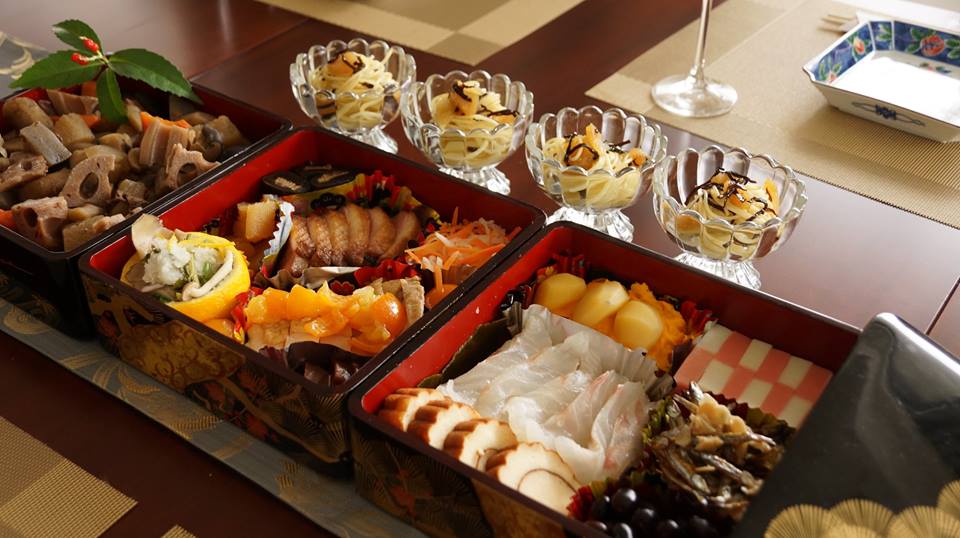
0 Comments
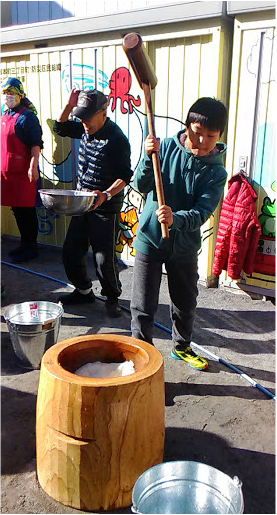 Yes, it's the time of the year of mochi-tsuki (rice pounding). A special rice, mochi-gome (sweet rice) is steamed and pounded to be made into the traditional rice cakes. These rice cakes are essential to the New Year tradition. During this season, you may encounter mochi-tsuki at any neighborhood or school, or community centers.
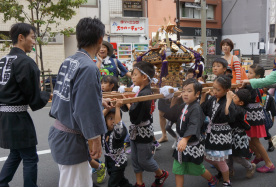
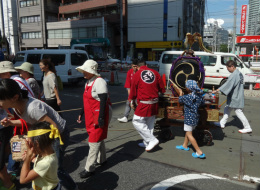
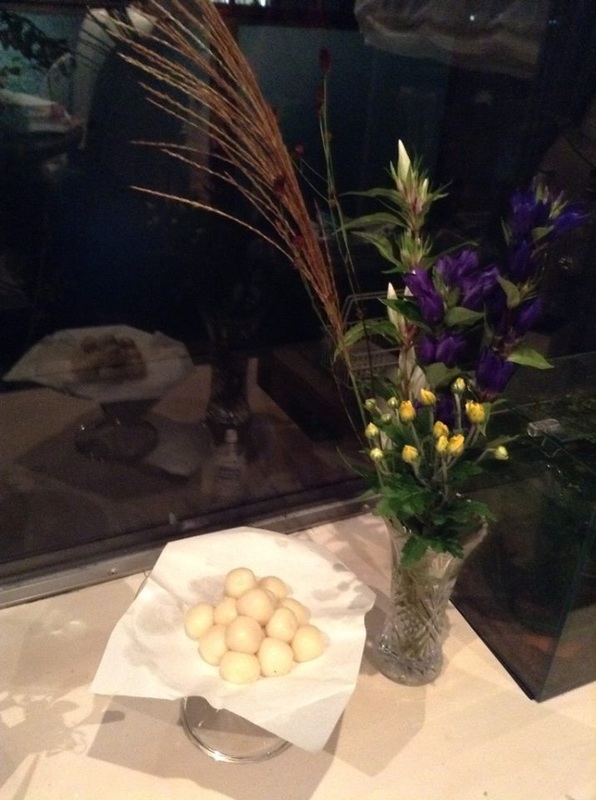
Rice cakes will be used to make Kagami-mochi a set of round shaped rice cakes resembling a Kagami (Mirror) - a symbol of a sacred treasure for god with an orange on top. This is an offering to the god on New Years Day. On January 11th, we will take down the Kagami-mochi and eat it. This is called "Kagami-biraki" (Opening of the Mirror). So on Sunday, we had our own Mochi Tsuki in our neighborhood and my two sons along with the other children helped with the mochi pounding. It’s the season of “Matusri”, the Autumn Festival. Each neighborhood having their own local shrines will be carrying around town the “Omikoshi” a sacred palanquin which holds god of the shrine. "Kodomo-mikoshi" is a smaller version for the children. Toddlers and small children also participate in this event by pulling the “Dashi”, a festival car carrying a big drum. The children after pulling the Dashi or carrying Omikoshi will get a goody bag and occasionally be rewarded by ice lollies and shaved ice. The word gets around very quickly among the mums on which neighborhood gives out the best goody bag and the kids will flock to that Omikoshi to get the reward. This is something like an early Halloween here for the kids as they will be tons of candy and sweets as well as bags snacks on this occasion.
|

AuthorI'm Miyuki and I teach Japanese Home cooking at my home in Tokyo. Archives
February 2021
Categories
All
|
 RSS Feed
service |
Information |
© COPYRIGHT 2015. ALL RIGHTS RESERVED.
|